The main printing processes explained simply
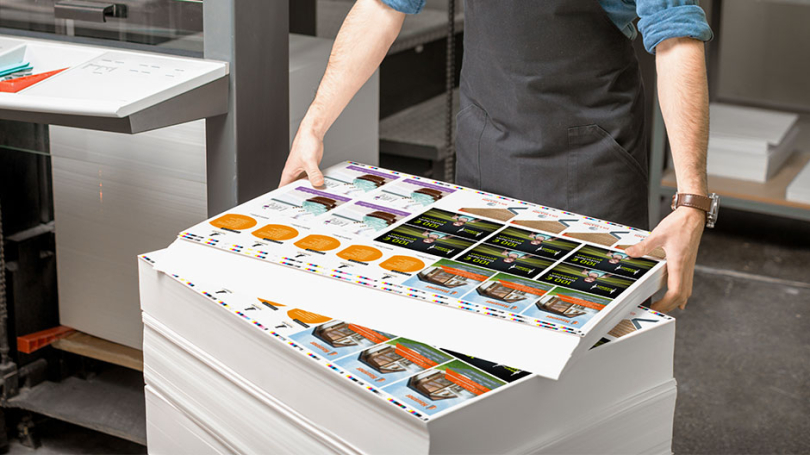
Offset printing, digital printing or letterpress – these terms are frequently encountered in the world of printed products. But what exactly do the various printing processes involve? And which technique delivers the best results for a particular project?
The various Printing process differ not only in how they work, but also in terms of Quality, Cost-effectiveness and Design optionsDepending on the print run, material and desired look, a different printing technique may be the best choice. From traditional methods for large print runs to modern solutions for customised print products, the printing industry – and above all, we – offer you a wide range of options.
In our blog article, we explore the Main printing processes Find out more. Learn more about how they work and their respective Previous- and disadvantages. This way, you’re guaranteed to find the right printing technique for your next printing project!
First things first: what is meant by ‘printing processes’?
Printing, or printing technology, refers to the process of transferring ink onto a substrate. Today, different printing processes are used depending on the product, material and print run.
Whilst offset and digital printing are the most important processes in modern day-to-day printing, letterpress, gravure and flexographic printing are primarily used for specialised applications. Whereas analogue printing requires a fixed printing plate to transfer the ink onto the material to be printed, this is not necessary in digital printing. The print data is transmitted to the printing press electronically (digitally). Depending on the relative position of the areas to be printed compared to the non-printing areas, we distinguish between four conventional printing processes and the Digital printing.
An overview of the printing processes:
- Letterpress (analogue printing process)
- Offset printing (analogue printing process)
- Through-printing (analogue printing process)
- Rotogravure printing (analogue printing process)
- Digital printing
1 | Offset printing: letterpress, flexo printing & linocut
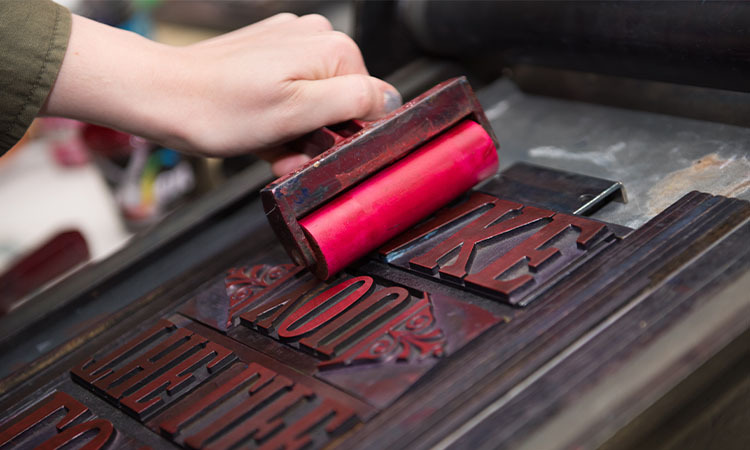
Invented by Johannes Gutenberg when he revolutionised modern book printing in 1450 with his movable metal type, letterpress printing is the oldest printing process in the world. It is called letterpress because the printed elements stand out from the printing plate both visually and to the touch. The areas to be printed are raised on the printing plate. The ink is transferred directly from the printing plate to the substrate; this is known as a direct printing process. The printing plate can consist of individual letters, in the form of a so-called cliché, or a combination of both. Clichés are available in various materials, which are selected according to requirements.
Applications of the letterpress printing process:
1 | Letterpress
A classic example of relief printing is letterpress, now often referred to as letterpress. It can be recognised by the shading and slight relief on the reverse side, as well as by the indented edges of the letters. By using thick, substantial card stock, the letterpress process allows for deep embossing, which creates a distinctive tactile appeal and can also be used as an artistic element. Today, traditional letterpress printing is primarily used for exclusive print products such as Wedding invitations, Business cards or high-quality Packaging Used. Its distinctive embossed finish makes it particularly popular for finishing touches.
druck.de tip: For inspiration on finishing options, you’ll find here Our products with cellophane coating.
2 | Flexographic printing, linocut and woodcut
Another form of relief printing is flexographic printing, which is used primarily in the packaging industry for printing on paper, cardboard, paperboard and plastics. Artistic forms of relief printing can be found, for example, in linocuts and woodcuts.
For what print runs is letterpress printing suitable?
However, the production and maintenance of printing plates is labour-intensive and costly; therefore, letterpress printing is a process suited to special occasions, but not for print runs with high print runs. Both offset and digital printing are better suited to more cost-effective production.
2 | Offset printing
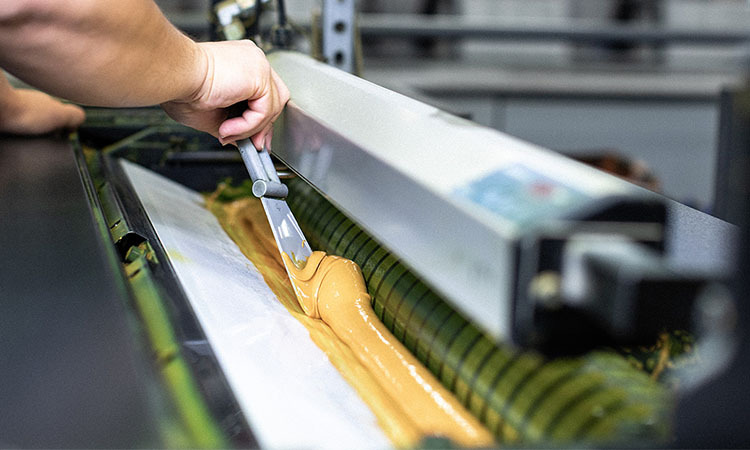
In offset printing, unlike other printing processes, both the areas to be printed and those not to be printed lie on the same plane; the print is not based on a difference in height. The areas to be printed are therefore on almost the same level as the areas not to be printed. This process is based on a chemical The principle of repelling grease and water. The origins of this technology lie in lithography, a printing process invented by Alois Senefelder at the end of the 18th century.
In the best-known flat-printing process, offset printing, Aluminium plates are used as printing plates. These printing plates have a coating on the printing areas that is ink-receptive (i.e. greasy). The non-printing areas consist of the bare aluminium plate, which is water-receptive due to its nature. During the printing process, the printing plate is moistened with water; the printing areas repel the water and accept ink. The printing ink is transferred to the paper via a rubber blanket. This is referred to as a indirect printing processes, as the substrate does not come into contact with the printing plate.
For what print runs is offset printing suitable?
Offset printing is the most popular form of flat-surface printing and, depending on the material being processed, is carried out either via Sheet-fed and web offset printing presses carried out. Within this framework, offset printing presses are further subdivided into different format classes. Offset printing is particularly suitable for medium to high print runs where consistently high print quality and cost-effective production are required. For smaller print runs, digital printing is often chosen nowadays. For large print runs on a large scale, web offset printing is more suitable.
3 | Carbonless copy
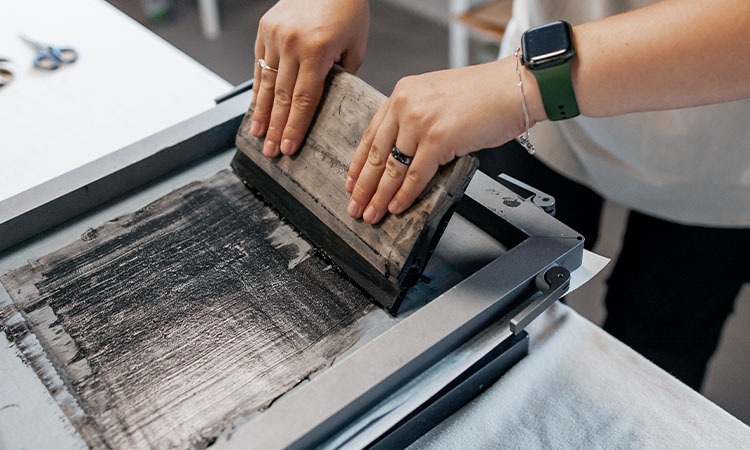
The most common form of carbonless copying is the Screen printing, in which the printing ink is forced through the openings of a fine-mesh screen onto the printing material beneath using a rubber squeegee.
Screen printing is particularly suitable for products that require high ink coverage, special effects or printing on unusual materials. Examples of applications include the Textiles, Promotional materials, glass, ceramics, wood and more.
4 | Gravure printing
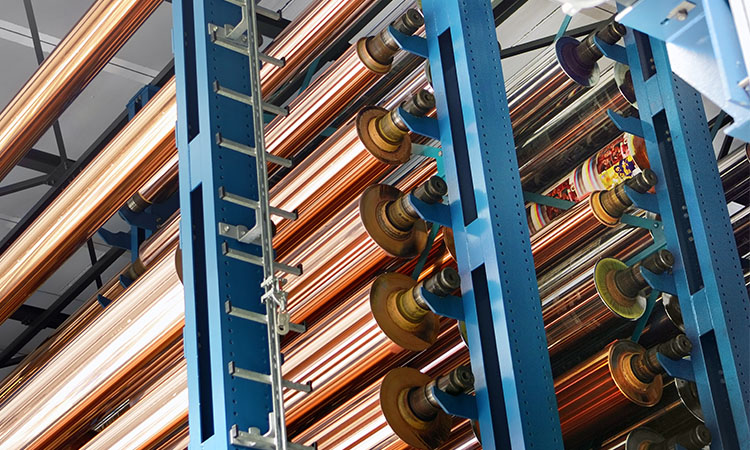
In rotogravure printing, the areas to be printed are recessed into the printing plate. The entire printing plate is inked, and the excess ink is scraped off with a squeegee, so that the ink remains only in the recesses (cells). The ink is transferred directly onto the substrate by means of high contact pressure.
With a few exceptions, only rotary presses are used for the production of high-volume Used for high-volume magazine printing and in packaging printing. Special forms of gravure printing include pad printing for printing on non-flat surfaces (e.g. in the production of promotional materials) and, in the artistic field, steel engraving, copperplate engraving and etching.
5 | Digital printing
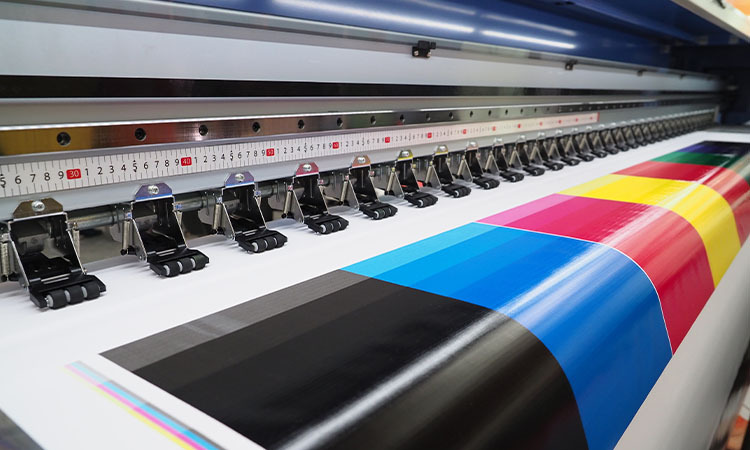
Digital printing is now one of the most important printing processes and is characterised above all by its Flexibility and efficiency. Unlike with analogue printing processes, no fixed printing plate is required. Instead The print data is transferred directly from the computer to the printing press, enabling print products to be produced quickly and easily.
Which products are suitable for digital printing?
Digital printing really comes into its own, particularly for small to medium print runs, as well as for customised printed products. As no printing plates need to be produced, content can be individuallycan be customised and produced cost-effectively even in small quantities. Typical applications include, amongst others Flyer, Business cards, Brochures, Posters, Mailings and personalised promotional materials.
What are the advantages of digital printing?
The main advantages include:
- short production times,
- cost-effective production of small print runs,
- Customisation of printed products,
- high print quality,
- Flexible customisation of print data.
Thanks to these features, digital printing has become established in many sectors and perfectly complements traditional printing processes such as offset printing.
druck.de tip: Would you like to find out more about digital printing? You can find all the information and details, as well as the pros and cons, in our blog article on digital printing.
Which printing method is suitable for which product?
Printing process | Typical areas of application |
Offset printing | Letterpress, finishing options, art prints |
Offset printing | Magazines, catalogues, large print runs |
Screen printing | Textiles, promotional items, speciality materials |
Gravure printing | Packaging, decorative printing, very large print runs |
Digital printing | Flyers, business cards, brochures, small print runs |
Summary of printing processes
Choosing the right printing process plays a crucial role in the impact and quality of a printed product. Thanks to the wide range of modern printing techniques available, a vast variety of requirements and design ideas can be professionally realised. We, too, offer you a wide selection of printing solutions that will help you showcase your creative projects to their best advantage. Discover the wide range of possibilities and find the right product for your next print job!