Design tips for business cards
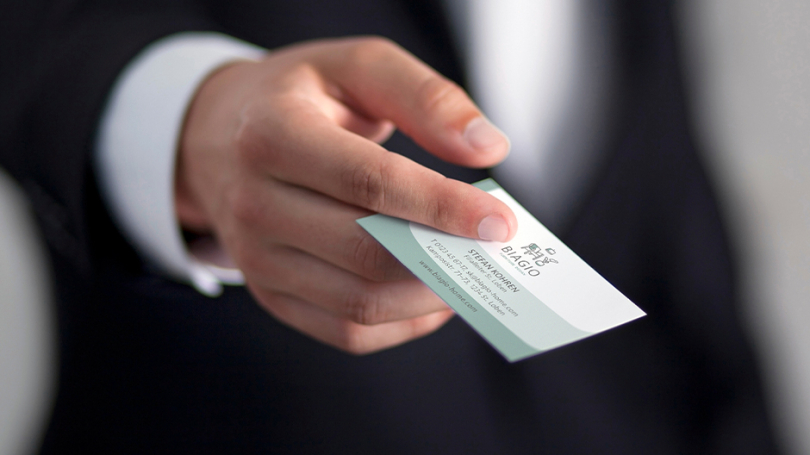
Whether at a trade fair, an event, in a café or simply out and about – there’s often an opportunity to, to make new contacts. A business card makes this moment special: it is handed over, looked at, perhaps tucked away straight away, and will remind the recipient of you for a long time to come.
Business cards are by no means just for entrepreneurs. Creative professionals, artists, club members and private individuals also use them to showcase their personality and style.
In short: Your A business card is a little ambassador, which presents you in style wherever you go. That’s why we’ve put together a few tips for you and your business card!
1 | Software: Your design tools
The best ideas need the right tools to become a reality. Depending on your experience and requirements, you can choose between professional graphics programmes and modern online design tools.
Common and useful design tools:
- The druck.de online designer: Our user-friendly online designer is available to you free of charge, offering a wide range of options, colours and shapes. You’ll find it directly on all our product pages under ‘Print data or designs’.
- Adobe Illustrator / InDesign: The classic choice for professionals. Offers full control over layout, typography and colour management for perfect print files.
- CorelDRAW: Ideal for precise vector work and creative designs.
- Canva: User-friendly and perfect for beginners. Lots of templates specifically for business cards.
- Affinity Designer / Affinity Publisher: Affordable alternatives to Adobe, powerful and flexible.
- Microsoft Publisher or Word: For basic templates without complex design requirements – more suited to quick drafts. 💡
2 | Design: Your calling card
Designing your business card is the moment when you decide how You’ll be seen by others. Think carefully about what information belongs on the card – and what doesn’t. Your name, role and contact details should be clear and easy to take in at a glance. Less is often more, as a tidy card looks more professional and sophisticated than one that’s overloaded with information.
A few tips for your design:
- Keep it simple: name, function, contact details – everything clear and easy to understand.
- Visual hierarchy: Key information should stand out, whilst secondary information should be placed discreetly.
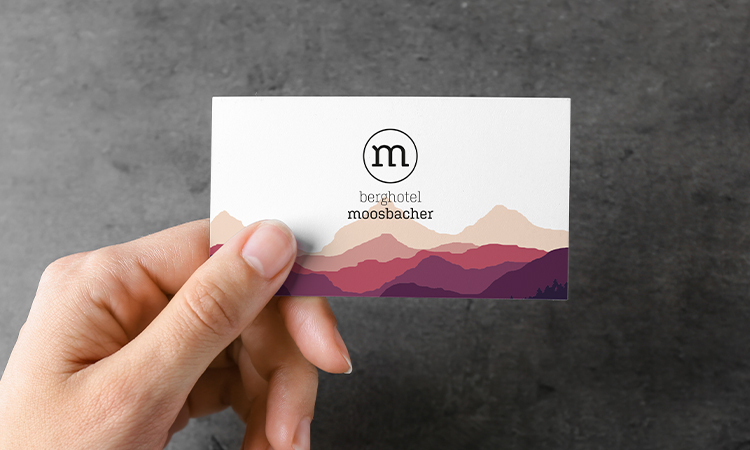
- Corporate identity: Stick to your brand colours, fonts and, where applicable, a logo to ensure brand recognition.
- Readability first: no font sizes that are too small, sufficient contrast between background and text.
- Creative elements: lines, shapes or an eye-catching image can give the card that certain something – but don’t overdo it!
3 | Formats & Materials: More than just standard
The classic format for business cards is 85 x 55 mm – practical, timeless and designed to fit into any wallet or card holder. But why always settle for the standard? You can achieve a modern and eye-catching look with square cards, with a Fold-out card create twice as much space for information or add a subtle, distinctive touch with rounded corners.
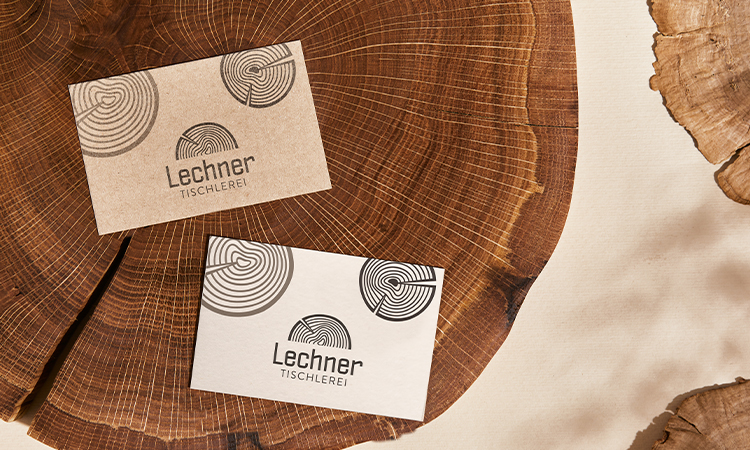
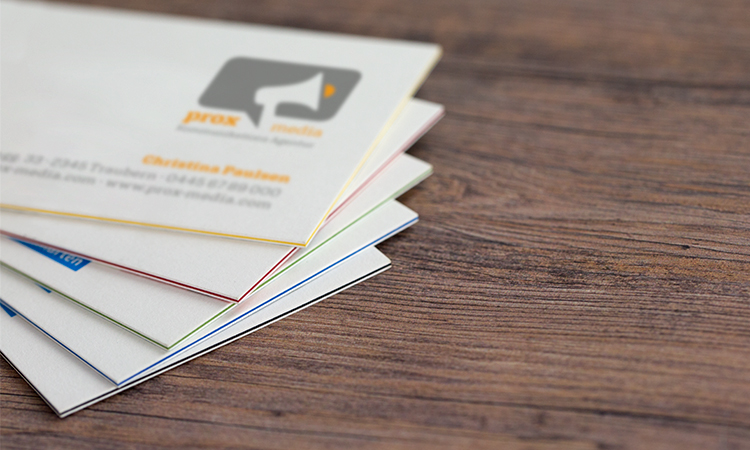
The choice of material also influences how your card is perceived. Natural or textured paper feels authentic and pleasantly rough to the touch; it conveys a down-to-earth feel and a sense of quality. A special coloured core cardboard adds an unusual, modern touch straight away with a coloured border. If sustainability is important to you, Recycled paper An environmentally friendly alternative that’s just as distinctive. To make the right impression, the paper weight should be at least 300 g/m². This ensures the cards feel sturdy and look high-quality.
4 | Finishing touches: Small extras, big impact
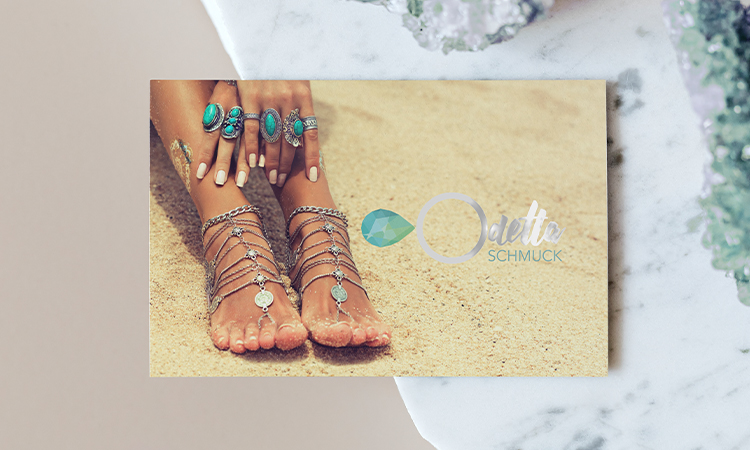
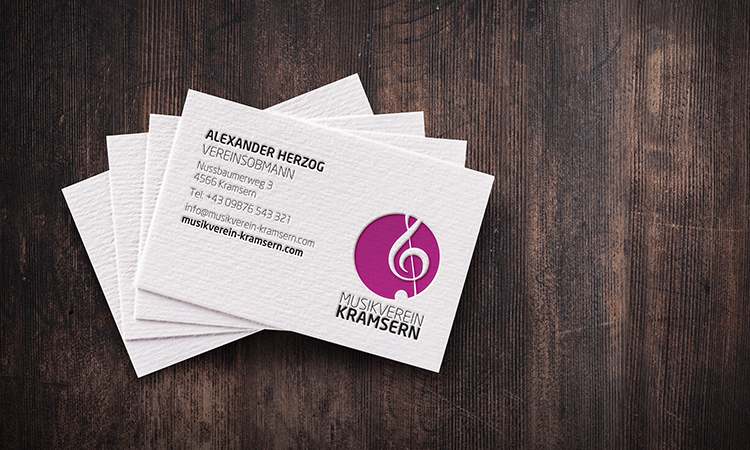
Sometimes it’s a small detail that leaves a lasting impression. The right finish can turn a good business card into an exceptional one. A matt or gloss cellophane coating not only enhances the card’s appearance but, above all, ensures it lasts longer. Hot foil stamping in various foil colours add a luxurious sheen, whilst a Embossing creates exciting three-dimensional structures. A Farbkern, a coloured inlay between the layers of cardboard, is a modern eye-catcher that stands out particularly well at the edges. The trick is to choose a finish that suits your style: a subtle accent can add a touch of elegance to the card, but too many effects can quickly make it look overloaded.


5 | Accessories: For a stylish look on the go
A perfectly designed business card also needs to be stored and presented in style. A Leather or metal business card holder not only protects against creases and stains, but also highlights your professionalism when you take the card out of your pocket. For events or trade fairs, elegant Card holders or small display stands that keep your cards readily to hand at all times. This ensures that your business cards aren’t simply left lying around somewhere, but are always perceived as a valuable part of your corporate image.
So much more than just a piece of card ...
A business card is far more than just a piece of card… it’s your personal pocket-sized mini-website. It conveys your style, your professionalism and sometimes even your creativity at a glance. If you’d like to explore materials, paper weights and special finishes in more depth, you’ll find some great tips in our in-depth blog post on how to create personalised, high-quality printed materials.